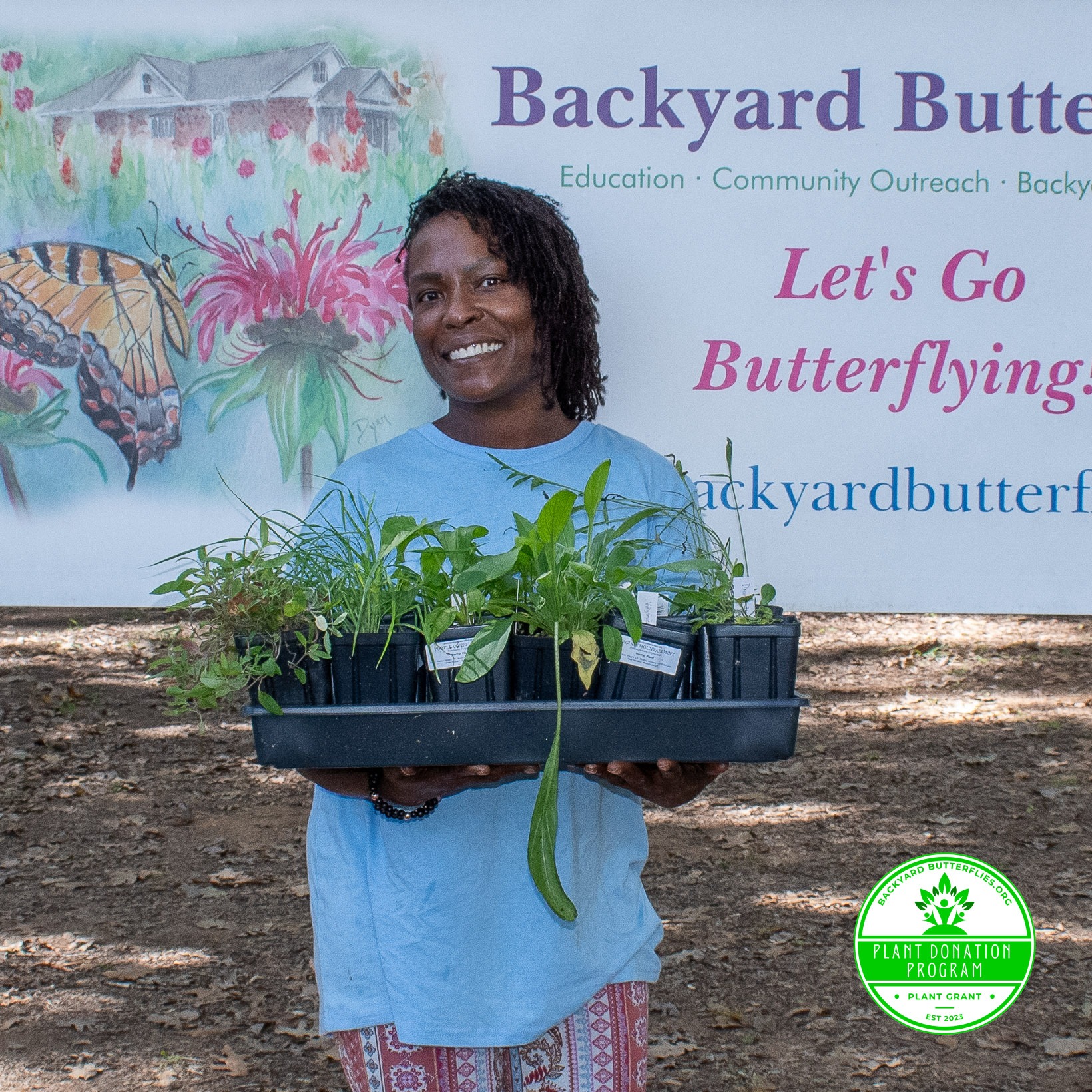
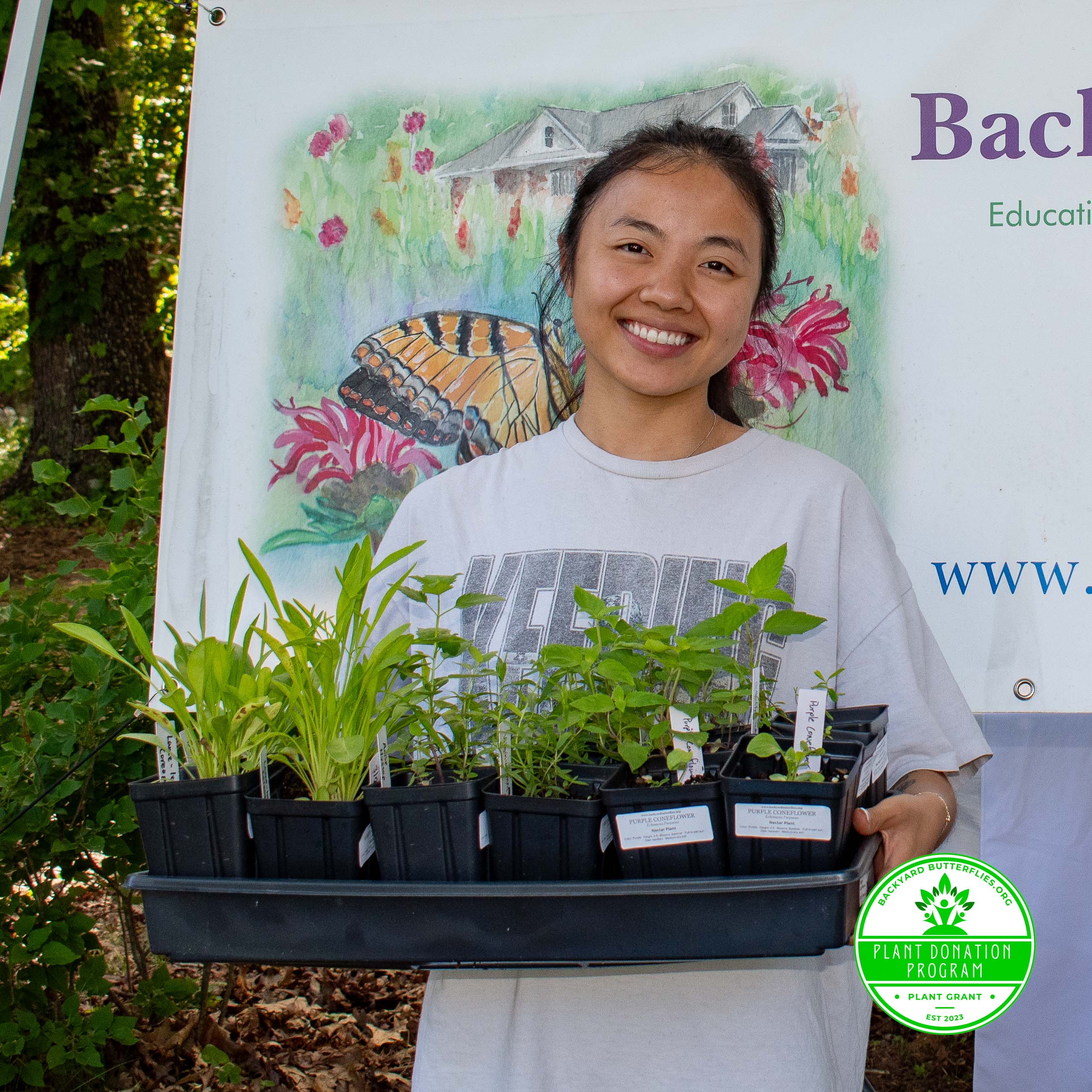
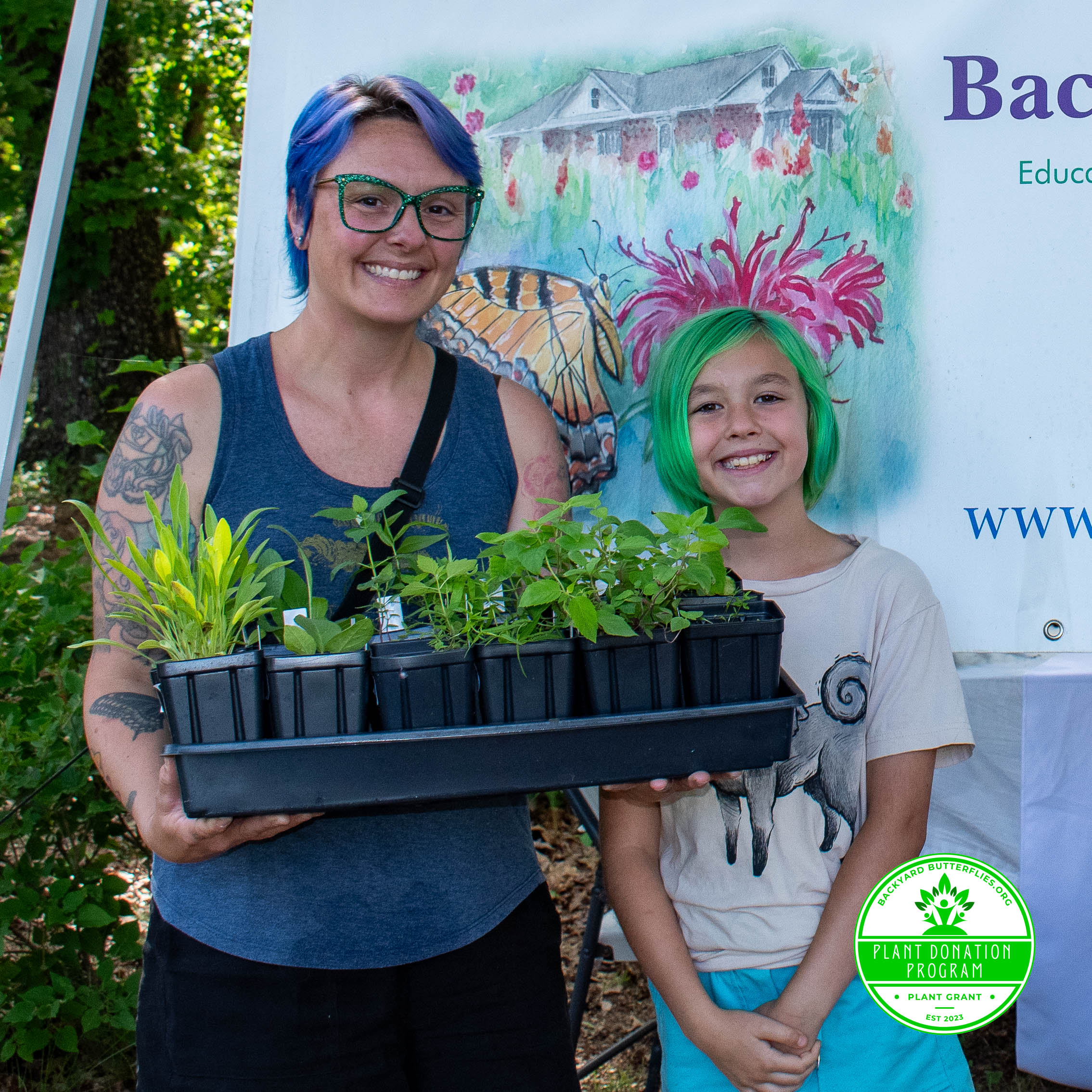
Past recipients of a Backyard Butterflies’ Plant Grant
Applications open June 1st at 12:00 AM. The Fall 2026 Plant Grant application will be live on our website — read on for everything you need to know.
What’s in the Fall 2026 Plant Grant
We’re excited to announce that the Fall 2026 Plant Grant is just around the corner. This cycle features a carefully chosen lineup of nine native species selected for their ecological value, ease of care, and the way they welcome pollinators, birds, and beneficial insects into any garden setting.
|
Keystone species Aromatic Aster |
Host plants Little Bluestem |
Nectar plants Wild Bergamot |
Each standard grant contains two plants of each of the nine species — 18 plants total — awarded on a first-come, first-served basis following eligibility screening.
Who Can Apply
The Plant Grant is open to a wide range of organizations: schools, churches, libraries, public parks and nature preserves, community pollinator gardens, nonprofits, Boy and Girl Scouts, 4-H Clubs, and even for-profit businesses. Homeowners associations with a communal or pollinator garden are also encouraged to apply — we offer five HOA grants each cycle alongside twenty standard grants.
To apply, you’ll need to include a brief explanation of your gardening project or intended use of the plants. Applicants are responsible for arranging transportation to pick up their grant in Hillsborough, NC.
How the Plant Grant Came to Be
The Plant Grant has a story behind it — one that started with a little inspiration from another organization, and a very practical problem: we always had plants left over after our fundraiser sales. Why not donate them?
It seemed simple enough at first. But it didn’t take long to realize that not every plant makes sense for a public space. Pasture thistle, for instance, is a remarkable pollinator plant — but handing it off to a school or community garden isn’t realistic, given the pointy leaves. Dogbane presented a different problem: it’s incredibly aggressive, and the kind of plant that has a way of making itself very much at home whether you want it to or not. So the leftover-plant approach needed some rethinking.
That’s where the real work of the grant began — curating a list of species that are genuinely easy to care for, ecologically meaningful, and appropriate for the kinds of spaces and people who would be receiving them. The result is the plant list you see today: chosen not just for what they give to pollinators, but for how well they’ll be welcomed wherever they’re planted.
“One day one of the recipients who came to pick up her award casually mentioned that she had nicknamed it ‘the plant grant’ — and that sounded so much better, so we borrowed it.”
The program was originally called the Plant Donation Program Grant, or PDP. The rename happened naturally, the way the best things do.
Where the Plants Have Gone
Since launching in 2023, the Plant Grant has grown steadily, and so has our sense of what it can become. Our goal each cycle — Spring and Fall — is to get native plants into spaces where they’ll do the most good: schoolyards, churchyards, community gardens, and anywhere people gather and might pause to notice a butterfly.
The organizations we’ve connected with along the way have been one of the most unexpected joys of the program. Schools across North Carolina make up the majority of recipients. A church here replacing ornamentals with natives. A community garden there finding room for a pollinator patch. One connection that grew into something lasting is with the Frisco Native American Museum & Natural History Center on the Outer Banks — a relationship that led to an annual Moth Night at the Museum. We’ll be sharing more about that soon.
As our name suggests, our goal is simple: get native plants into backyards, gardens, and shared spaces across North Carolina, and let them do what they do best.
Applications open June 1st at 12:00 AM. Visit our website to learn more about the Plant Grant, read stories from past recipients, and submit your application when the time comes.