|
|
|
|
|
|
|
I hope this finds you well and in good spirits as we rapidly lose daylight toward the inevitability of autumn. Where did the summer go? It just arrived!
|
And yet, here we are in September, which means that Christmas is practically upon us. In just a few short weeks, we'll be reaching out again to ask for your help with our Winter Propagation Team. It's hard to believe that 2026 is already winding down.
|
And what a strange and interesting year it has been. According to the Chinese zodiac, 2026 is the Year of the Fire Horse — a year said to bring energy, unpredictability, and the unexpected. I don't know about you, but so far, that description seems fairly appropriate. It has certainly been a dramatic and interesting ride!
|
It doesn't seem that long ago that we were potting up seedlings, hoping they would survive the freaky weather this spring, and now we're already looking toward autumn and the end of another year.
|
A few weeks ago, while talking with some folks during a butterfly count, I found myself marveling at something that seems almost impossibly simple — and yet incredibly profound — to me.
|
We can go buy a plant, put it in the ground, and that plant can give life to a caterpillar that eventually becomes a butterfly.
|
How amazing is that? I know it sounds obvious. It's just a plant. It's just a caterpillar. It's just a butterfly. But stop and think about it for a moment.
|
We live surrounded by things that seem magical because of what human beings have created. We can watch a movie with astonishing special effects. We can read a book that transports us to another world. We can listen to music that moves us. I can sit here at my computer and communicate with someone halfway around the world.
|
But none of those things are nature. We can't manufacture a caterpillar. We can't program a butterfly into existence. We can create virtually using AI, but no matter how realistic it becomes, it isn't tangible reality that we can interact with.
|
And I've seen the impact of that reality on people. I've watched a moth decide that a particular human makes an excellent landing strip, and suddenly that moth becomes the center of attention. People gather around, pass it from one person to another, marvel at it, take pictures, and share the experience. Nature creates an instant community. There is a kind of connection and camaraderie in those moments that you simply can't get from a screen.
|
And here's the really cool part: we don't have to be scientists, artists, engineers, or magicians to participate in it. We can simply plant a native plant and see what happens.
|
We can watch a female butterfly lay eggs on a host plant. Later, we might discover the tiny caterpillars eating the leaves, and follow them as they grow through their different instars. If we're lucky, we might even discover a chrysalis tucked away in some strange and interesting location in our yard.
|
Or, we might simply notice a really fresh butterfly flying around one day. And that's when it hits you: this butterfly may have spent its entire caterpillar life right here in my yard! That feeling is priceless.
|
It's one of the reasons I care so much about making native plants accessible to people. This kind of wonder shouldn't require a lot of money, specialized knowledge, or a large property. It can happen in a backyard, a front yard, a garden bed, or even a few containers. A single plant can become the beginning of an entire life cycle — and we get to witness it!
|
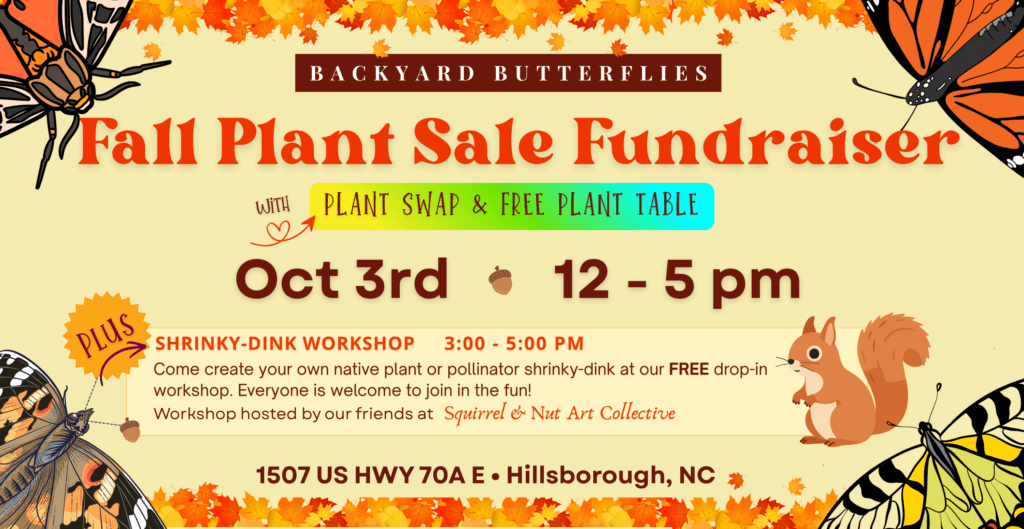
And that brings me to our Fall Plant Sale Fundraiser on October 3.
|
While the plant sale certainly is a fundraiser, that's not really what it's about for me. What I look forward to most is having a day together with our neighbors and friends in the community.
|
Maybe you'll find a few plants you've been looking for? Maybe you'll discover something completely unexpected? Maybe you'll bring plants to swap, take home a few free plants, make something at our Shrinky Dink workshop, or simply spend some time talking with people who share your love of nature? Come find out what happens!
|
And if you volunteer, know that it's all about having a fun, relaxed day where we get to spend some time sharing our love of plants and insects with our community. It's about having fun while we coincidentally happen to be doing some work.
|
We greatly appreciate that you give your time and energy to us, and that you share your knowledge, enthusiasm, and love of nature with our community. Together, we support Lepidoptera, improve the environment around us, and create little habitats where life can flourish.
|
Because when we improve the environment around us, we improve ourselves. That's what makes it come full circle.
|
I hope to see you Saturday, October 3, at the sale!
|
|
|
|
|
Fall Plant Sale Fundraiser
|
|
|
|
|
|
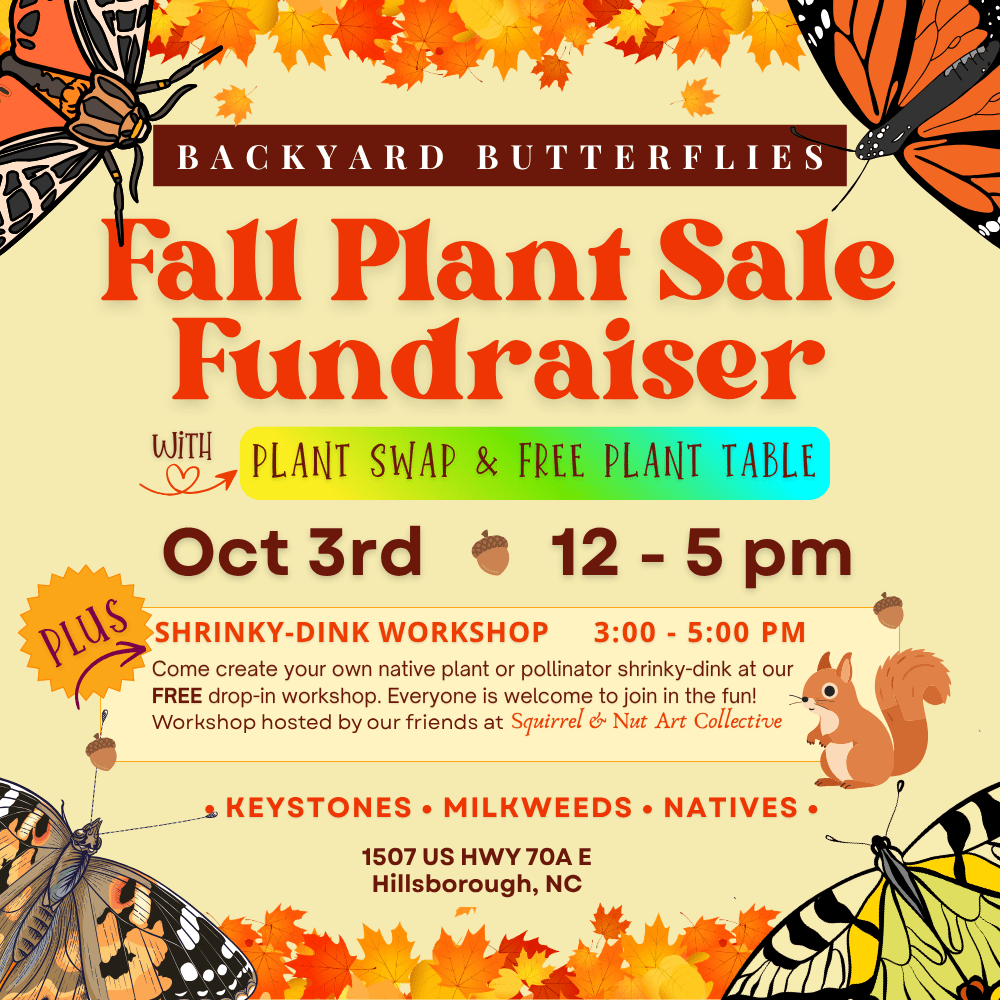
Fall Plant Sale: One Day, Lots of Ways to Grow!
Our Fall Plant Sale Fundraiser is back — and this year, we’re bringing some of our favorite Open House traditions along with it! Use the button above to learn more about the Plant Sale and browse the catalog of plants available at the sale.
|
About the Plant Sale
We’ll have approximately 55 species of flowering plants and shrubs available at this one-day-only sale. Because these plants were germinated just a few months ago, most of what you’ll find will be young, fresh nursery stock — perfect for getting established in your garden this fall.
|
We’ll also have a limited number of plants left over from our spring sale. These older plants have somehow managed to survive the heat and drought of summer, so they may look a little worse for wear. Don’t let their appearance fool you, though! If they’re still in sellable condition, they’re perfectly good plants. Once planted in the ground, they should settle in and return next year ready to grow.
|
We’re keeping the fall collection intentionally limited. Unlike our spring fundraiser, there will not be a fall pre-sale this year. Our fall sale is designed as a simple, one-day opportunity to come browse, find some great native plants, and support Backyard Butterflies.
|
Want to see what we’ll have? We recently redesigned our online plant pages to function more like a plant catalog, where you can browse the available species and learn more about them before you come to the sale.
|
The Free Plant Table
One of our favorite Open House traditions is coming along for the ride!
|
The Free Plant Table is our way of giving good plants a second chance while making native gardening accessible to everyone. Some plants may be a little past their prime for a traditional plant sale, while others may simply be plants we grew too many of or that didn’t sell particularly well. They may need a little pampering, but they’re still perfectly capable of growing into happy, healthy garden plants.
|
There is a limit of 9 free plants per person, give or take a few. If you need a larger quantity of plants for a particular project or garden, please come talk with us — we may be able to work something out.
|
Plant Swap
|
The Plant Swap is another Open House tradition that we’re bringing to the Fall Plant Sale!
|
The swap gives you an opportunity to exchange plants with Backyard Butterflies or other people attending the sale. And participation is completely optional — you do not need to bring plants to participate in the plant sale, and you do not need to participate in the swap to attend the event. It’s simply another option for those who want to share plants and discover something new.
|
If you do bring plants to swap, please keep the purpose of the swap in mind: plants that benefit pollinators. Native plants are especially encouraged, but beneficial non-native plants are welcome as long as they are recognized pollinator plants.
|
Please no invasive or known-problematic plants, and no houseplants. This swap is all about putting plants into the landscape that can help support pollinators and the larger ecosystem.
|
Shrinky Dink Pollinator Workshop
Our friends at the Squirrel and Nut Art Collective reached out to us with an idea for bringing a little creativity to the Fall Plant Sale — and we couldn't resist!
|
They'll be joining us for a free, family-friendly Shrinky Dink workshop from 3–5 p.m., featuring a selection of pollinator-themed designs. The workshop is open to all ages and is a drop-in activity, so you can stop by whenever you like during those two hours.
|
Our plant sale usually starts to quiet down in the afternoon, making 3–5 p.m. the perfect time to come hang out, make something fun, and enjoy the community. You don't even have to be shopping for plants to participate!
|
Rain or Shine
|
The Fall Plant Sale will be held rain or shine — and by “rain,” we mean reasonable rain!
|
|
If weather conditions become too severe or otherwise make the event unsafe or impractical, we may need to postpone or reschedule. If that happens, we'll keep everyone informed through our Facebook page and other event announcements.
|
|
|
|
|
|
|
|
Ready to Join Us?
|
When you're ready to sign up, just click the volunteer registration button.
|
|
|
|
|
|
Volunteers Make It Happen!
Our Fall Plant Sale is more than a fundraiser — it’s an opportunity to bring people together around a shared love of plants, pollinators, and the natural world. And that community connection depends on our volunteers!
|
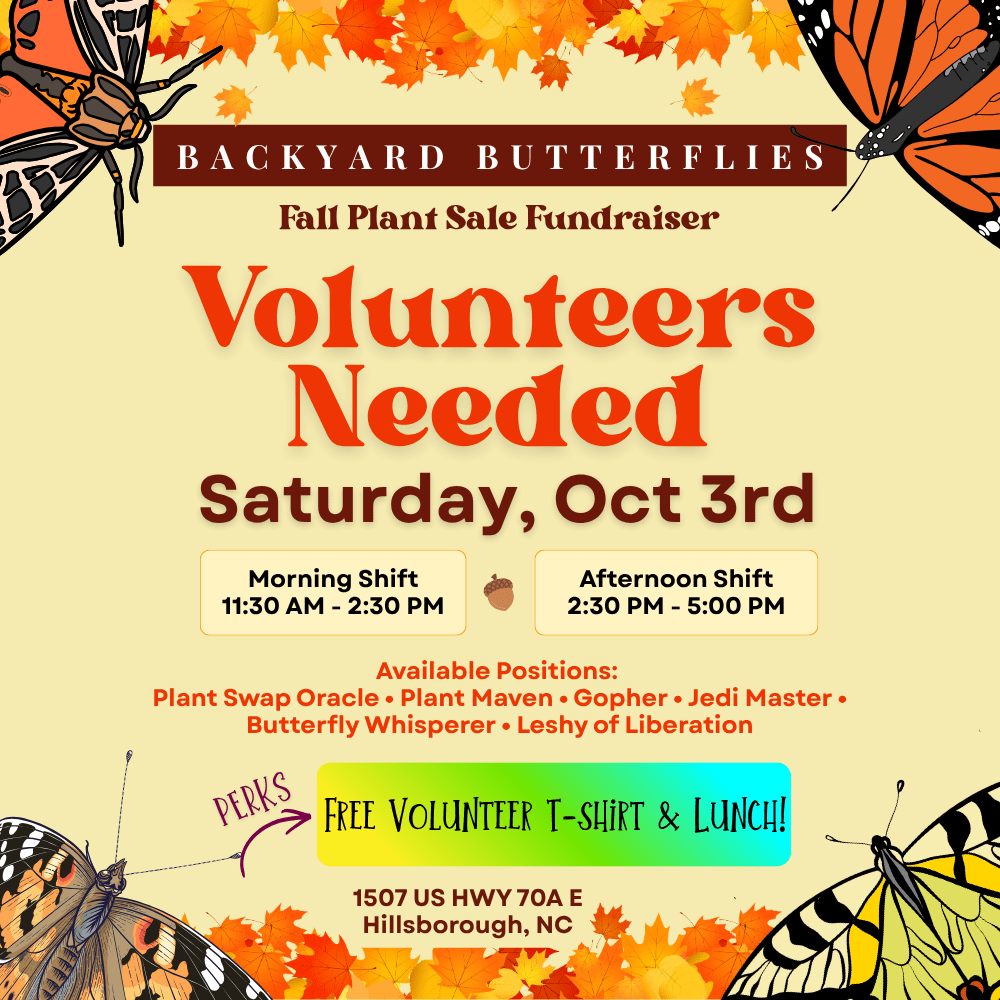
We need at least one volunteer in each position for every shift, so having enough people sign up is essential to making the day run smoothly. But you don't need to be an expert to help. In fact, we're not necessarily looking for experts at all.
|
|
Today’s gardeners have access to an incredible amount of information right at their fingertips. What they can’t get from a website or a phone, however, is a real person to talk with — someone who can share an experience, answer a question, or simply get excited with them about a plant, a caterpillar, or the possibility of creating a little habitat in their own backyard.
|
That's what our volunteers provide.
|
If you've ever grown a plant, raised a caterpillar, watched a butterfly emerge, or simply enjoy talking with people about nature, you already have what it takes to volunteer. You don't need a degree in horticulture or entomology. You just need to be comfortable talking with people, sharing what you know, and helping create a welcoming environment for everyone who comes through the sale.
|
Whether you're ready to become a Jedi Knight of Parking, a Plant Maven, a Butterfly Whisperer, or take on one of our other volunteer roles, there's a place for you!
|
Volunteer Perks
We appreciate the time and energy our volunteers contribute, and we want you to enjoy the day, too. Volunteers will receive:
|
- 10% off your plant purchase during the sale
- First dibs on remaining free-table plants after the event, with the exception of trees and shrubs purchased wholesale for the sale
- A complimentary event T-shirt to wear during your shift so visitors can easily recognize you as a volunteer
- A catered autumn-themed lunch featuring soup, sandwiches, and salad, with vegetarian and vegan options available upon request
- Plenty of snacks and beverages throughout the day to keep you fueled
|
Most importantly, you'll get to spend the day with a wonderful group of people who care about creating habitat, supporting pollinators, planting natives, and enjoying the natural world.
|
|
|
|
𝗢𝗨𝗥 𝗩𝗢𝗟𝗨𝗡𝗧𝗘𝗘𝗥 𝗣𝗢𝗦𝗜𝗧𝗜𝗢𝗡𝗦
𝐏𝐥𝐚𝐧𝐭 𝐒𝐰𝐚𝐩 𝐎𝐫𝐚𝐜𝐥𝐞
|
People will come from afar seeking your divine guidance on swapping plants. In addition to channeling ancient wisdom, you’ll help people check in their plants, make sure plants are labeled, and manage the swap area.
|
𝐏𝐥𝐚𝐧𝐭 𝐌𝐚𝐯𝐞𝐧
|
If you’ve ever grown a plant before, you can be a Maven! This isn’t about knowledge — it’s about relationship and your love of plants. Help people find plants and make recommendations.
|
𝐆𝐨𝐩𝐡𝐞𝐫
|
For this position, we’re looking for someone who is a jack-of-all-trades and willing to “go for” things — like trays of plants from the greenhouse. You might also fill in for any volunteer position if we’re short-staffed.
|
𝐉𝐞𝐝𝐢 𝐌𝐚𝐬𝐭𝐞𝐫
|
Why be a parking attendant when you can be a Jedi Master and wield a “lightsaber”? Okay, the traffic-directing wand is a bit of a stretch as a lightsaber, but imagination will take you far in this role of helping people park.
|
𝐁𝐮𝐭𝐭𝐞𝐫𝐟𝐥𝐲 𝐖𝐡𝐢𝐬𝐩𝐞𝐫𝐞𝐫
|
Your job will be to flutter — literally or figuratively, you get to decide! — about our habitat. Show people all the interesting stuff, like flowers, caterpillars, butterflies, and more. Think of it as part interpreter, part tour guide, and part living insect all at the same time!
|
𝐂𝐚𝐬𝐡𝐢𝐞𝐫
|
Our checkout system uses PayPal POS in addition to taking old-fashioned cash. We can quickly teach you how to use the system, and someone will always be nearby to help you with more advanced transactions.
|
𝐋𝐞𝐬𝐡𝐲 𝐨𝐟 𝐋𝐢𝐛𝐞𝐫𝐚𝐭𝐢𝐨𝐧
|
As Leshy of Liberation, encourage people to get some free plants — save them from the compost pile and give them a second chance! Assist people with taking free plants and make sure the area is maintained.
|
|
|
|
Ready to Join Us?
|
When you're ready to sign up, just click the volunteer registration button.
|
|
|
|
|
|
|
|
|
New Plant Information Cards Debut This Fall
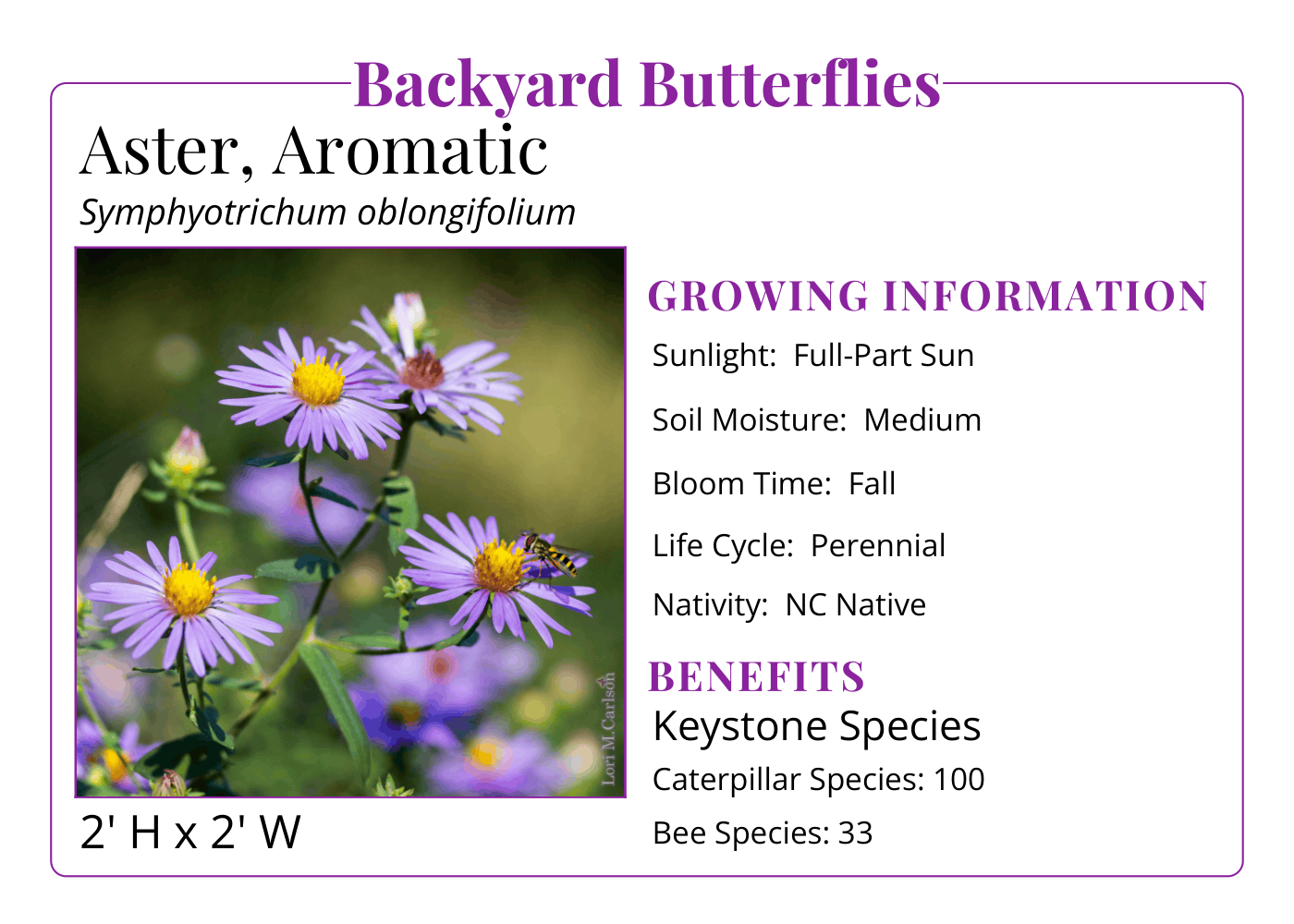
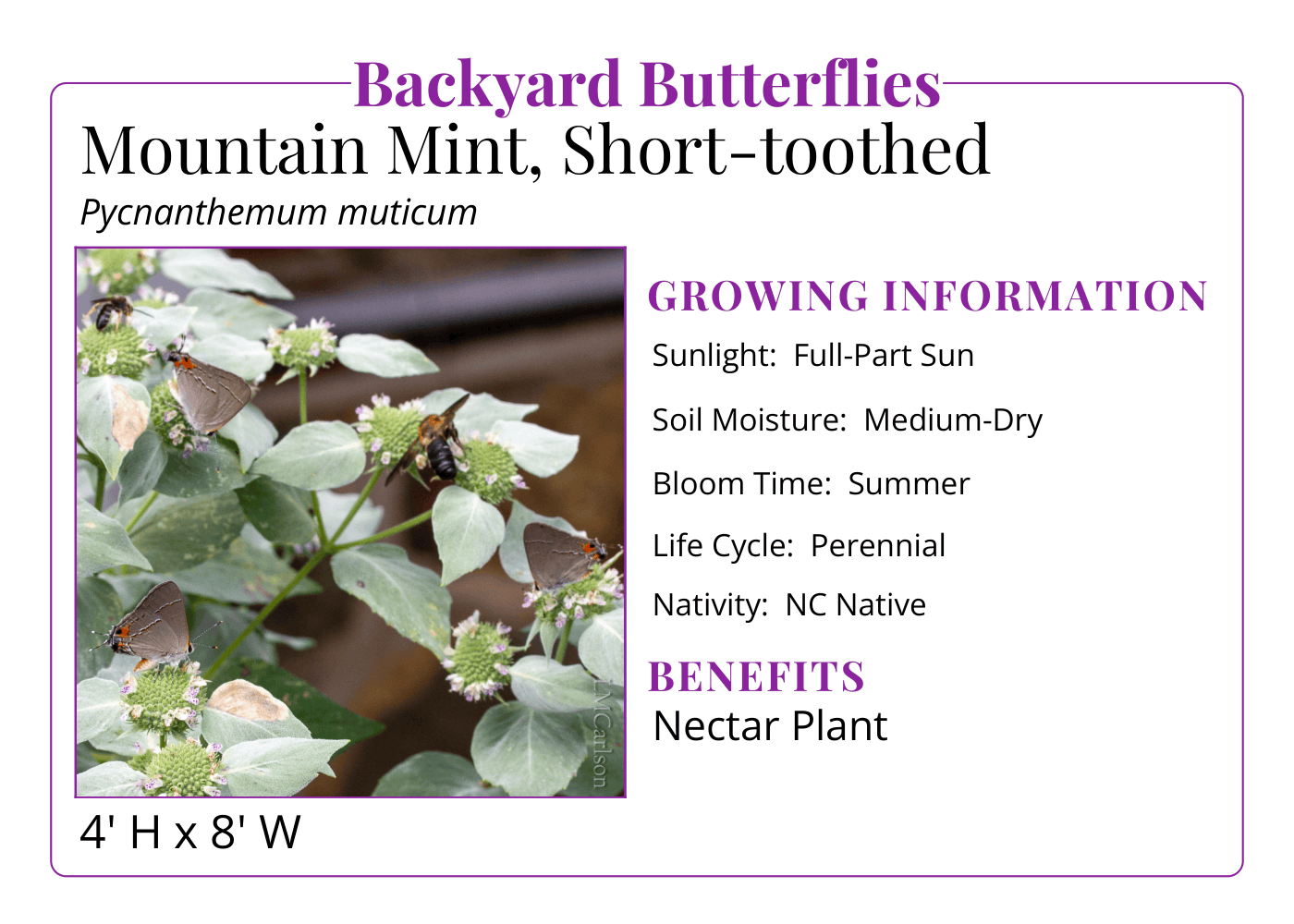
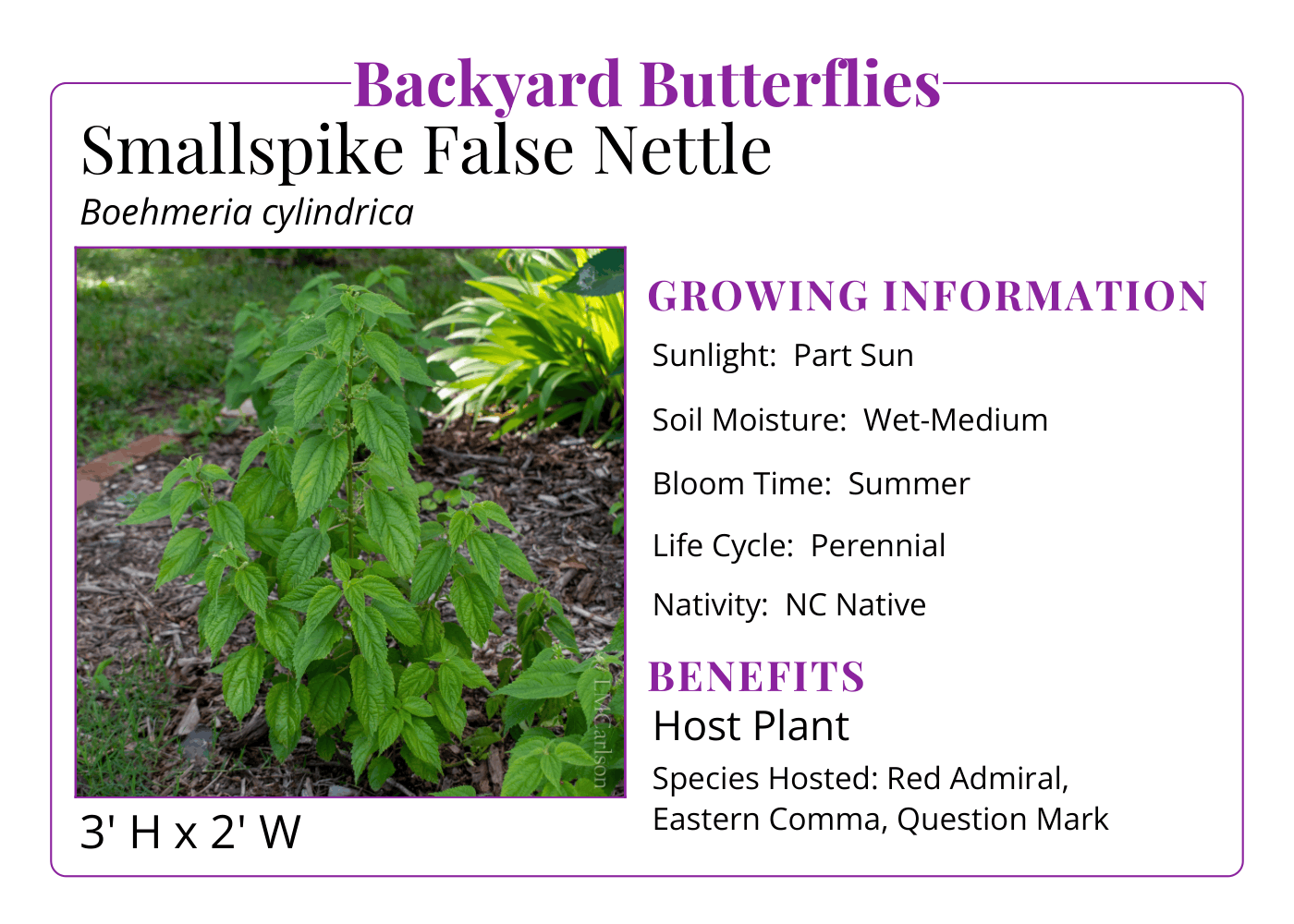
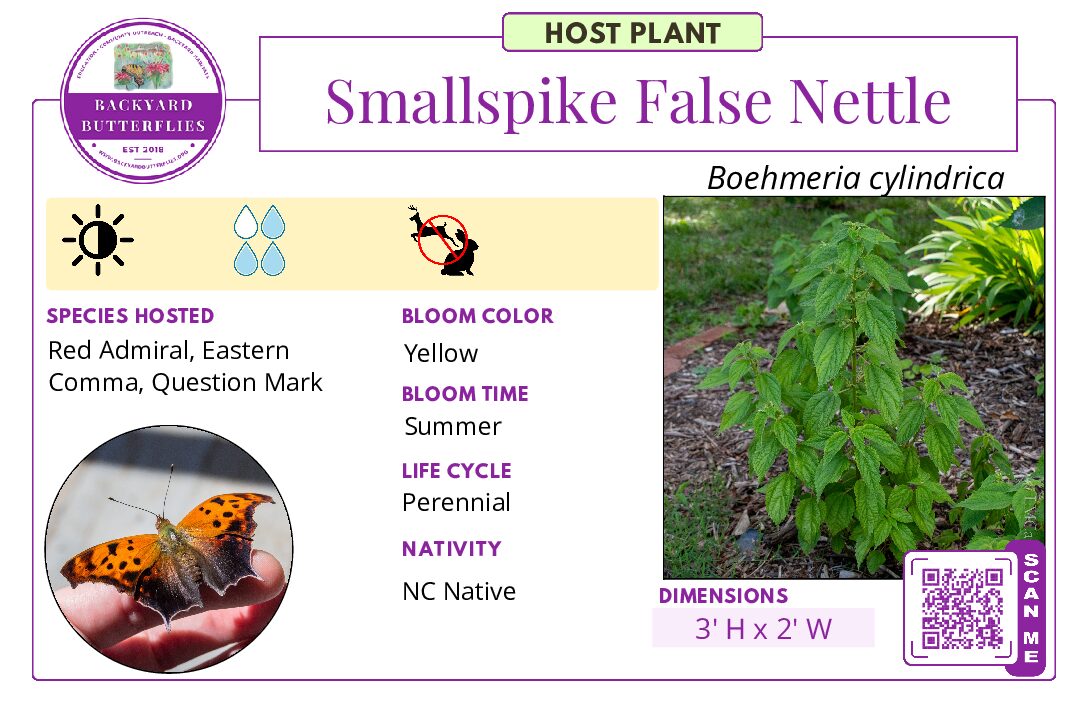
We’ve redesigned our plant information cards, and they’ll be making their debut at the Fall Plant Sale Fundraiser.
|
The redesign is more than a fresh look. We wanted to make it easier for you to understand why we grow and sell these plants in the first place: to support Lepidoptera and the many other creatures that depend on native plants.
|
|
The new cards are designed to help you see the ecological value of each plant and make more informed choices about the plants you bring home. Each card now prominently identifies the plant’s primary ecological role using a color-coded category — Keystone, Host Plant, or Nectar Plant — along with visual icons and information about the wildlife that depends on it.
|
|
|
|
Keystone
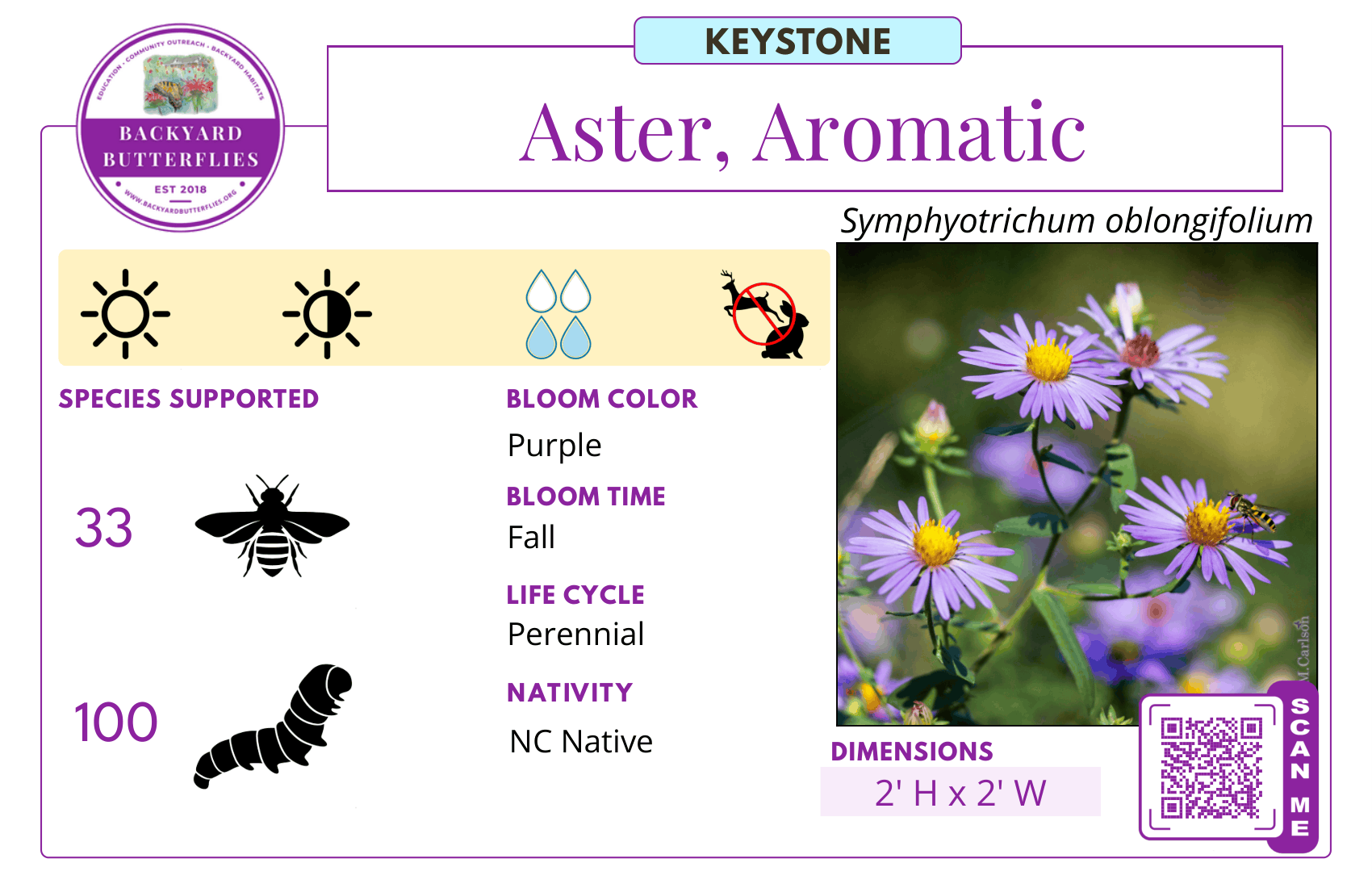
Keystone plants support an especially large number of species, and our new cards make that impact much easier to see at a glance.
|
|
Each Keystone card prominently displays the number of bee species and number of caterpillar species supported by the plant, using large numbers and easy-to-recognize icons.
|
|
|
|
|
|
|
|
Nectar Plant
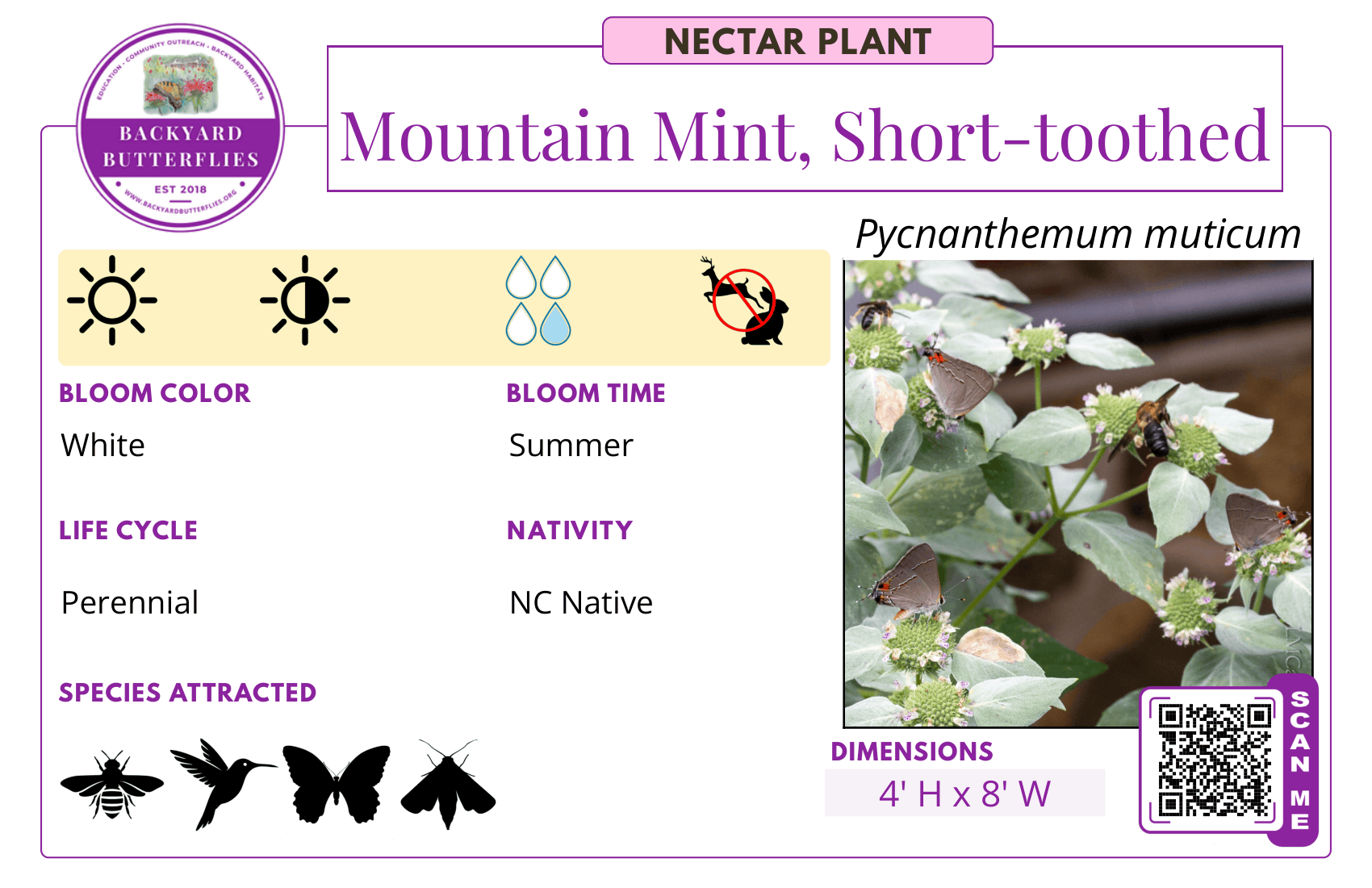
Nectar plants provide an important food source for a variety of wildlife, and the new cards show who you can expect to find visiting them.
|
|
Icons now identify the different groups attracted to each plant: bees, birds, butterflies, and moths.
|
|
|
|
|
|
|
|
Host Plant
For plants that serve as host plants for Lepidoptera, the species that uses the plant as a host is now prominently featured on the card.
|
|
You’ll also find a photograph of either the caterpillar or adult associated with that host plant, making it easier to see exactly who depends on the plant.
|
|
|
|
|
|
|
|
Growing Conditions at a Glance
We’ve also replaced the written descriptions of sunlight and soil moisture requirements with simple visual icons. This makes it easier to quickly determine whether a plant is a good match for the conditions in your garden.
|
Critter Resistance & Critter Love
Finally, we’ve added a brand-new category: Critter Resistance or Critter Love!
|
Some plants are naturally more resistant to browsing by garden critters, while others are particularly beloved by them. Each card now has a unique icon to indicate whether a plant is Critter Resistant or Critter Love — because sometimes knowing who doesn't want to eat your plant is just as useful as knowing who does! (Critters = deer, rabbits)
|
QRCode: Take the Card Home With You
Over the years, we’ve noticed customers taking photographs of our plant info cards with their phones while shopping at the sale. We’ve even received requests for copies of individual cards from many as well. So when we redesigned them, I wanted to make it easy for you to take the information home with you. Simply scan the QR code on the card, and you’ll be able to instantly download a copy to keep on your phone for future reference.
|
The file downloads a PDF copy of the card for you to view on your device, or can be printed on a half-sheet of paper and laminated using a 6" x 9" pouch.
|
|
Our goal with these redesigned cards is simple: to help you understand the wildlife connections each plant can create and make informed choices about the plants you bring home. We want you to know not just what a plant needs to grow, but what it can provide for the life around it. After all, we're not just selling plants. We're helping you build habitat.
|
|
|
|
|
|
|
|
HAVE YOU SEEN THE MOTH SHROOMS?
|
|
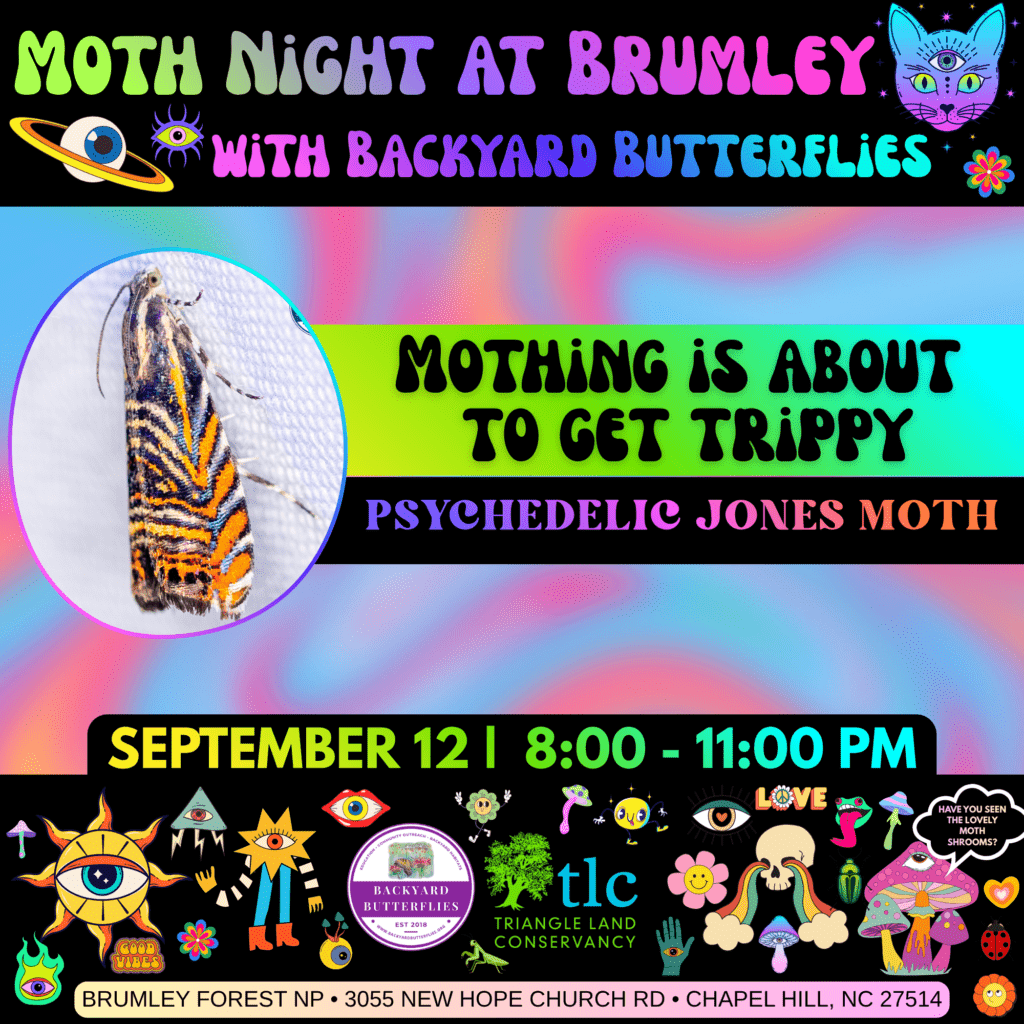
Or maybe you're ready for a little moth trip? Because on Saturday, September 12, we're going to expand our moth consciousness at Moth Night at Brumley Nature Preserve!
|
And this might be your chance to see one of the most wonderfully weird moths around: the Psychedelic Jones Moth (Thaumatographa jonesi).
|
This tiny moth is associated with pine trees and tends to make an appearance early in the evening, which makes Moth Night a particularly good opportunity to look for it. Its flight period is happening right now, and sightings have been popping up across North Carolina on iNaturalist.
|
We'll have a special Psychedelic Jones station set up with photos of the moth so everyone knows exactly what we're looking for. And if one shows up, we'll sound the alarm and let everyone know so you can come take a look at this seriously cool little moth.
|
But there are no guarantees! That's part of the fun of Moth Night. We can't promise that Psychedelic Jones will make an appearance, but given the timing, the habitat, and the recent reports, there's a very good chance we could get lucky.
|
So tune in, turn on, and moth out! 😵💫🦋
|
📅 Saturday, September 12
🕗 8:00–11:00 p.m.
📍 Brumley Nature Preserve
|
|
(And no, you don't need to drop acid to see the Psychedelic Jones moth, but you do need to register to attend the Moth Night! 😉)
|
|
|
|
|
|
|
|
|
|
Support Our Missions
|
|
Your contribution helps us fulfill our missions of providing education, community outreach, and assistance in creating backyard butterfly and moth friendly habitats.
|
|
|
|
|
|
|
|
|
|
|